
President Trump publicly framed the Iranian drones attacks on U.S. embassies as part of a broader cycle of retaliation tied to the U.S.–Israeli strikes on Iran, but he also added a new political and strategic justification in his remarks. His statements came as the conflict escalated sharply across the region, with embassies in Saudi Arabia, Kuwait, Bahrain, Jordan, Qatar, and the UAE facing attacks or evacuations.
What Trump Said About Why Iran Attacked U.S. Embassies
Trump linked the embassy attacks to several overlapping factors:
1. Retaliation for U.S.–Israeli Strikes on Iran
He emphasized that Iran’s drone attacks were a direct response to the joint U.S.–Israeli operation that killed Iran’s Supreme Leader, Ayatollah Ali Khamenei, and other senior officials. This aligns with reporting that Iran launched widespread retaliatory strikes across the Gulf after the Feb. 28 attacks.
2. Iran Targeting American Interests to Pressure the U.S.
Trump suggested that Iran was deliberately striking U.S. diplomatic facilities to force the U.S. to pull back from the region and to demonstrate that American personnel and assets were vulnerable. Embassy closures and evacuations across the Gulf followed these attacks.
3. A Broader Warning That the Conflict Could Become a Long War
Trump stated that the war could last “four to five weeks, but could go longer,” implying that Iran’s embassy attacks were part of a larger confrontation that might expand. This framing positioned the embassy strikes as part of a prolonged struggle rather than isolated incidents.
4. Iran Responding to U.S. Calls for Regime Change
Although the administration later walked back regime‑change language, Trump initially urged Iranians to “overthrow their government.” Iranian attacks on U.S. embassies were interpreted by the administration as Tehran’s response to this pressure.
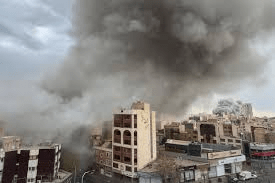
Where the Attacks Happened
Multiple embassies and diplomatic facilities were hit or forced to close:
- Saudi Arabia (Riyadh): Two drones struck the U.S. Embassy, causing a limited fire.
- Kuwait: Embassy attacked and closed to the public.
- Bahrain, Qatar, UAE, Jordan: U.S. ordered evacuations of non‑essential personnel due to Iranian strikes and threats.
These attacks were part of Iran’s expanded targeting across the Gulf as it retaliated for the U.S.–Israeli strikes.
How Trump’s New Framing Fits Into the Larger Conflict
Trump’s comments added a political dimension to the military explanation:
- He portrayed Iran’s embassy attacks as proof of Tehran’s desperation and aggression following the loss of its top leadership.
- He suggested the attacks were part of Iran’s attempt to undermine U.S. resolve and force a withdrawal from the Middle East.
- He signaled that the U.S. response could escalate, leaving open the possibility of deeper military involvement.
This narrative positioned the embassies strikes not just as retaliation, but as part of a strategic contest over regional dominance and U.S. influence.

 DAVFLY