
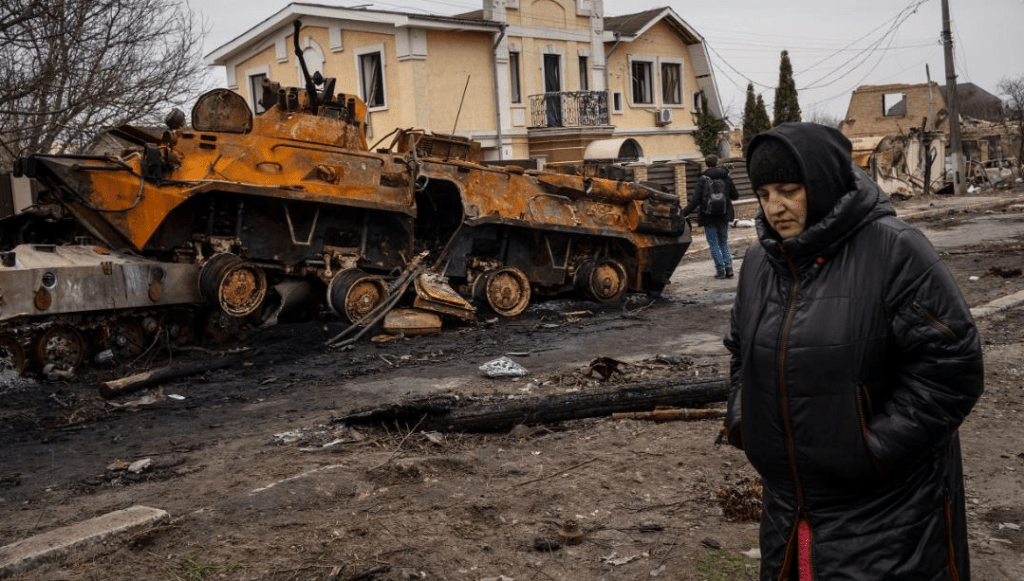
The latest tranche of sanctions was announced following a meeting of the NATO Foreign Ministers in Brussels on Thursday.
The United States on Thursday imposed blocking sanctions on two Russian state-owned companies it said are involved in the war in Ukraine, Secretary of State Antony Blinken said in a statement. Read more…
The United States has announced new sanctions targeting major Russian oil companies and financial networks, aiming to further restrict Moscow’s ability to fund its war in Ukraine. These measures block Americans from dealing with Russia’s largest energy firms and expand penalties on individuals and entities tied to the war effort.
What the New Sanctions Include
🔹 1. Restrictions on Russian Oil Giants
- The sanctions block U.S. dealings with Rosneft and Lukoil, two of Russia’s largest oil companies.
- Any company 50% or more owned by these firms is also restricted.
🔹 2. Expanded Financial Penalties
- The U.S. continues to isolate Russia from the global financial system.
- Previous measures already froze $5 billion of Russia’s central bank assets and restricted dealings with 80% of Russia’s banking sector.
🔹 3. Coordinated Action With the EU
- The European Union quickly joined the U.S. in imposing additional economic sanctions, tightening pressure on Russia’s energy revenue.
How Ukraine Responded
- Ukrainian President Volodymyr Zelenskyy welcomed the sanctions, calling them a “clear signal that aggression will not go unanswered.”
- He emphasized that cutting off Russia’s revenue streams is critical to slowing the war.
How Russia Responded
- Russian officials dismissed the sanctions as “painful, but not deadly.”
- A former Russian president labeled them an “act of war,” though the Kremlin maintains they will not change its military strategy.
Why These Sanctions Matter
They target Russia’s most important economic lifeline: energy exports.
- Before the war, Russia earned over $240 billion annually from energy exports.
- Cutting access to global markets and Western investment is designed to limit Russia’s ability to fund military operations.
They increase diplomatic pressure.
- The U.S. and EU aim to force Russia back to negotiations by tightening economic constraints.
Here are some deeper breakdowns.
- How sanctions affect global oil prices
- How Russia is using its “shadow fleet” to evade sanctions
- The economic impact on European industries
Summary: Sanctions have raised energy costs, disrupted supply chains, and forced major structural shifts across European industries.
European manufacturers, energy‑intensive sectors, and export‑dependent industries have faced higher operating costs and supply instability, while some sectors (like renewables and defense) have seen accelerated growth.
How Sanctions on Russia Impact European Industries
1. Energy‑Intensive Industries Hit Hard
Sanctions on Russian oil, gas, and coal forced Europe to rapidly replace its largest energy supplier.
Effects:
- Higher energy prices for factories in Germany, Italy, France, and Eastern Europe.
- Chemical, steel, aluminum, fertilizer, and glass manufacturers saw major cost spikes.
- Some plants temporarily shut down or reduced output due to unaffordable energy.
Why: Russia was Europe’s largest supplier of natural gas before 2022. Cutting that supply created immediate shortages and price surges.
2. Manufacturing & Automotive Supply Chains Disrupted
European manufacturers relied on Russian:
- Metals (nickel, palladium, aluminum)
- Industrial chemicals
- Energy inputs
Consequences:
- Higher raw material costs for automakers and electronics manufacturers.
- Delays in production due to shortages of critical metals.
- Increased reliance on alternative suppliers in Asia and Africa.
3. Export‑Dependent Industries Lost Access to Russian Markets
Before sanctions, Russia was a major export destination for:
- Machinery
- Luxury goods
- Automotive parts
- Pharmaceuticals
Impact:
- Companies lost billions in annual revenue.
- Some firms (e.g., German automakers) exited Russia entirely, writing off factories and assets.
4. Energy Sector Forced Into Rapid Transformation
Sanctions on Russian oil and gas accelerated Europe’s shift toward:
- LNG imports from the U.S. and Qatar
- Renewable energy expansion
- New pipeline and storage infrastructure
Impact:
- Short‑term pain: high prices, supply insecurity.
- Long‑term gain: faster transition to renewables and energy independence.
5. Defense & Cybersecurity Industries Benefited
The war and sanctions increased:
- Defense spending across the EU
- Demand for cybersecurity services
- Investment in military technology
This sector saw growth rather than contraction.
6. Financial Sector Adjusted to Compliance Burdens
European banks faced:
- New compliance requirements
- Restrictions on Russian clients
- Frozen Russian assets
This increased operational costs but reduced exposure to Russian financial risk.
7. Long‑Term Structural Shifts
Analysts note that sanctions have:
- Degraded Russia’s energy sector, forcing Europe to diversify permanently
- Created long‑term cost pressures for energy‑heavy industries
- Accelerated industrial policy changes across the EU
Europe is still adapting, but the shift is now structural, not temporary.
More Finds:
- Specific industries (automotive, chemicals, steel, agriculture)
- Country‑by‑country impact (Germany vs. Italy vs. France)
- Short‑term vs. long‑term economic effects
- How companies are adapting

 DAVFLY