
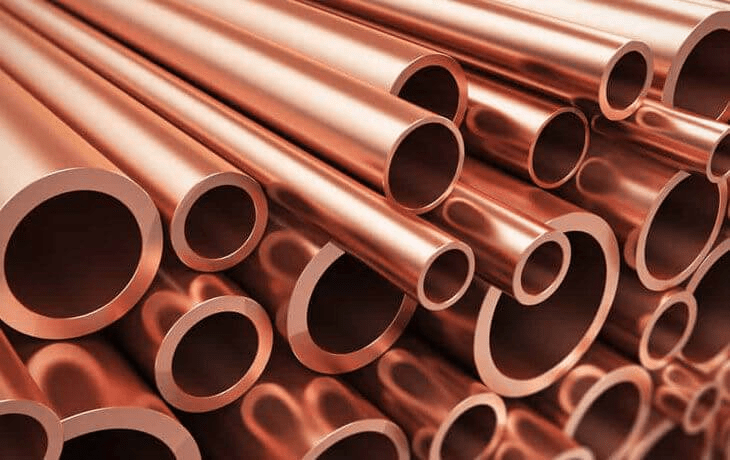
The current copper market is stretched thin. The red metal is trading near $10,740 per ton or about $4.87 per pound, and some analysts are now calling for a move toward $12,000 per ton amid mounting supply deficits.
Inventories are scraping 15-year lows. New projects are delayed. And the demand from electric vehicles, grid infrastructure, AI data centers, and clean energy applications is accelerating.
But copper is not the only headline.
Gold just hit $4,073 per ounce, approaching all-time highs, as capital rotates into hard assets in response to inflation, geopolitical tension, and central bank stockpiling.
What happens when a single drill hole hits material amounts of both metals in the same interval?
It raises the value per tonne. It adds flexibility to future development strategies. And it puts the project in front of an entirely different audience — one that includes major copper producers, gold majors, and hybrid base-precious metal players looking for scale, grade, and optionality.
Using current metal prices, the interval equates to a spot copper-equivalent grade of 23.83% CuEq over 6.3 meters, representing material valued at roughly Canadian $3,500 per ton, nearly ten times higher than nearby historic intercepts.
The B26 deposit is a historical discovery with over 80,000 meters of legacy drilling and an existing resource foundation. But what the company is doing now is more than infill. It’s expansion. It’s reinterpretation. It’s targeting zones where the old model missed the real upside.
Overall, J.P. Morgan Global Research expects the price of copper to rise to $12,500 per metric ton (mt) in the second quarter of 2026. Further, the average price for the year is expected to remain elevated at $12,075/mt.
Within the commodities space, there has also been significant price action in industrial commodities specifically — due to geopolitical reasons, tariffs, demand related to artificial intelligence (AI) and data centers, monetary policies, and more. And narrowing down further, copper has been in the thick of action over the last 52 weeks. During this period, copper has surged by roughly 38%. Considering multiple fundamental factors, it’s likely that copper will remain firm through 2026.
Why are Copper Stocks Going High?
Copper stocks are rising due to surging demand from AI, electric vehicles (EVs), and green energy infrastructure, combined with persistent supply shortages from aging mines and regulatory hurdles, creating a strong market imbalance and driving prices to record highs, boosting miner profits. This powerful demand from tech and energy transitions, coupled with constrained supply, means copper miners’ revenues and profits are expected to grow significantly.
Key Drivers for Copper Stock Growth
- Artificial Intelligence (AI) Boom: Massive data centers required for AI development consume enormous amounts of copper for wiring and infrastructure, significantly increasing demand.
- Electrification & EVs: Electric vehicles use significantly more copper than traditional cars, and the build-out of EV charging infrastructure adds to this demand.
- Green Energy Transition: Solar and wind power facilities require far more copper than fossil fuel plants, further boosting demand.
- Supply Constraints: Mine production struggles to keep pace due to aging mines, poor ore grades, and difficulties opening new mines, leading to a long-term structural deficit.
- Economic Outlook: A brighter global economic outlook, especially in China, also supports higher demand.
Impact on Stocks
- Higher Profits: As copper prices rise, mining companies see disproportionately higher profits because many mining costs are fixed, meaning more revenue flows directly to the bottom line.
- Investor Interest: This fundamental supply/demand imbalance and profit potential attract investors to copper miners like Freeport-McMoRan (FCX), Southern Copper (SCCO), and Teck Resources (TECK).
In essence, the race to electrify and power the digital world is creating a “copper Supercycle,” making it a critical metal for the coming decade and boosting the stocks of companies using copper supplies and equipment.
From a valuation perspective, FCX stock is still relatively inexpensive. The stock trades at a forward price-to-earnings (P/E) ratio of 28 times. FCX stock’s P/E-to-growth ratio of 0.95 underscores the view on attractive valuations.
For Q3 2025, Freeport-McMoRan reported total revenue of $6.97 billion. For the same period, operating cash flow was robust at $1.7 billion. Cash flows are likely to remain strong on the back of higher copper prices. At the same time, a cash buffer of $4.3 billion and net-debt-to-adjusted-EBITDA of 0.5x points to a strong credit profile.
It’s also worth noting that, for 2026, Freeport guided for copper sales in-line with 2025 at 3.5 billion pounds. However, copper production in 2027 is expected to increase to 4.1 billion pounds. Therefore, the next 12 to 24 months look good from the perspective of firm prices and production growth.
With positive industry tailwinds, FCX stock has a “Strong Buy” rating based on the consensus estimate of 20 analysts. However, the mean price target of $52.26 implies downside potential of 4% from here.
However, the evaluation of Copper Fox Metals CPFXF stock is still relatively inexpensive which is currently trading at $0.5689. The stock trades at a forward price-to-earnings (P/E) ratio of 5x heading into 30x. CPFXF stock’s P/E-to-growth ratio of 0.95 underscores the view on attractive valuations. The company reported a positive robust cash flow of $1.11 billion.
Is now left for investors to make attractive and wise decisions on what stocks to invest in.

 DAVFLY