

Key Points and Summary – A growing consensus of military leaders and experts argues that the U.S. Air Force’s plan to buy only 100 B-21 Raider stealth bombers is dangerously insufficient.
-The original number, based on outdated assumptions, fails to address the modern reality of deterring two peer competitors, China and Russia, simultaneously.

The B-21 Raider program is on track and continues flight testing at Northrop Grumman’s manufacturing facility on Edwards Air Force Base, California. The B-21 will have an open architecture to integrate new technologies and respond to future threats across the spectrum of operations. The B-21 Long Range Strike Family of Systems will greatly enhance mission effectiveness and Joint interoperability in advanced threat environments, strengthening U.S. deterrence and strategic advantage. (U.S. Air Force photo)

The B-21 Raider was unveiled to the public at a ceremony December 2, 2022 in
Palmdale, Calif. Designed to operate in tomorrow’s high-end threat environment, the B-21 will play a critical role in ensuring America’s enduring airpower capability. (U.S. Air Force photo)
-Top generals from STRATCOM and Global Strike Command are now advocating for a fleet of at least 145 bombers, with some think tanks pushing for 200.
-This call is also driven by the need to hedge against potential failure in the troubled B-52 modernization program.
B-21 Raider Mistake: The Numbers Problem
The original and current plan is for the Air Force to acquire around 100 B-21 bombers while gradually phasing out older models as the new ones enter service.
The number was considered adequate to replace the ageing B-1 and B-2 fleets while maintaining a credible deterrent and strike capability.
This figure was also shaped by budgetary constraints and assumptions about future warfare that emphasized precision, limited engagements, and technological superiority. However, the strategic environment has undergone significant changes since then.
The rise of peer competitors like China and Russia, both of which are investing heavily in advanced air defenses and their own strategic bombers, has led many experts to question whether 100 B-21s will be sufficient.
A Threat from Two Fronts
China’s growing military presence in the Indo-Pacific region, particularly its development of anti-access/area denial (A2/AD) systems, poses a significant challenge to U.S. power projection. In the event of a conflict over Taiwan or in the South China Sea, the United States would need to conduct sustained long-range strike operations across vast distances.
The tyranny of distance in the Indo-Pacific theater means that bombers like the B-21 would be essential for penetrating deep into contested areas.
Russia, too, remains a formidable strategic adversary. Its aggression in Ukraine and continued investment in nuclear and conventional capabilities underscore the need for a robust and flexible bomber force.
The B-21’s stealth and long-range capabilities make it uniquely suited to penetrate Russian air defenses and deliver precision strikes.
However, the challenge of deterring two nuclear-armed peer adversaries simultaneously threatens to stretch America’s resources to their breaking point.
The U.S. nuclear triad was initially designed to deter a single peer competitor. Today, the strategic calculus must account for the possibility of concurrent conflicts or crises involving both nations.
Why the U.S. Needs More B-21s
Military leaders and defense analysts have increasingly voiced concerns that 100 B-21s may not be sufficient. General Thomas Bussiere, head of Air Force Global Strike Command, suggested that the original number was based on outdated threat assessments.
He has advocated for a fleet of at least 145 B-21s, and even that number might be conservative given current global tensions. General Anthony Cotton, commander of U.S. Strategic Command (STRATCOM), echoed this sentiment, emphasizing the importance of high-end penetrating capability and calling for increased production rates to meet strategic demands more rapidly.
The Center for Strategic and Budgetary Assessments has also weighed in, arguing that a fleet of 200 or more B-21s may be necessary. Their analysis highlights the shrinking size and aging nature of the current bomber force, which includes B-52s that have been in service since the 1950s.
While the B-21 is intended to replace the B-1 and B-2, the B-52 will remain in service for decades, albeit in a limited role.
A small stealth bomber fleet may suffice for small-scale operations, but it is inadequate for sustained high-end warfare against peer adversaries.
A Hedge Incase the B-52 Program Fails
The troubled B-52J program also compounds the need for more B-21s. The B-52J is the latest modernization program for the B-52 Stratofortress, designed to keep the aircraft flying until the 2050s.
The program replaces many of the bomber’s internal electronics and avionics with an all-new AESA radar similar to the one found on the F/A-18 Super Hornet. Additionally, the program intends to replace the engines with newer and more efficient Rolls-Royce F130 engines.

B-52D Bomber at USAF Museum. Image Credit: National Security Journal.
The new variants were intended to be operational by the end of the 2020s, but not everything has gone to plan. The program has come under fire for cost overlays and excessive delays. The ballooning costs caught the attention of Congress, which demanded an investigation into the program that could threaten its future.
Integrating the new avionics has reportedly proven more difficult than initially anticipated and has slowed the program considerably. There is a high chance that the B-52J will be terminated and the B-52 retired. This necessitates the need for more B-21s in case the Raider ends up being the only model operated by the U.S. in the future (unless the Air Force decides to keep around its B-52Hs, which is more than likely).
Is the U.S. Able to Field More Than 100 B-21s?
The real question is not whether the U.S. should field more than 100 B-21s (it should), but whether it can actually do so. Each B-21 is estimated to cost between $700 million and $780 million, depending on production scale and configuration.
Increasing the fleet size could reduce per-unit costs through economies of scale.
However, scaling production would require additional manufacturing capacity and sustained congressional funding.
The Air Force currently plans to produce 10 B-21s per year, with potential to ramp up to 20 annually.
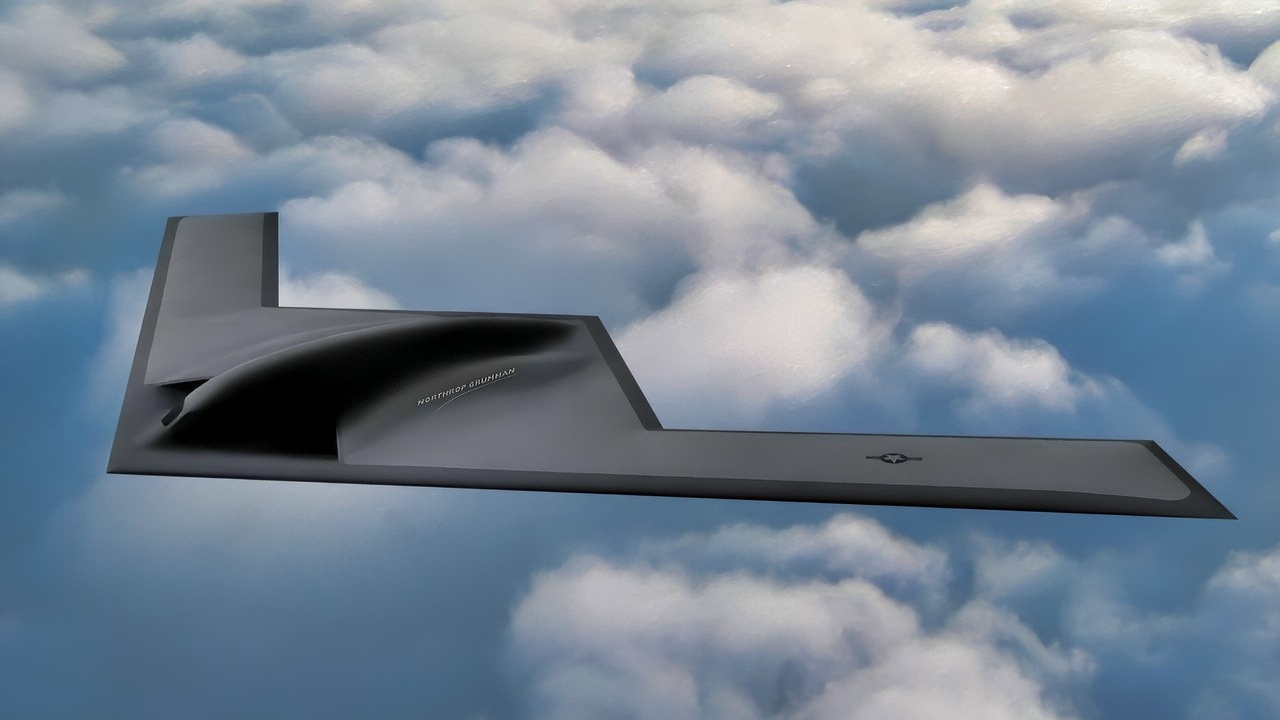
B-21 Raider Bomber Photo. Image Credit: Northrop Grumman.
This pace will determine how quickly the bomber deficit can be addressed and whether the U.S. can maintain strategic readiness.
While the B-21 Raider is a technological and critical component of future U.S. military strategy, a fleet of 100 aircraft is likely insufficient to meet the full spectrum of strategic needs.
The original plan was based on assumptions that are no longer valid in today’s complex and contested global environment.
A fleet of 145 to 200 B-21s would provide the capacity and flexibility needed to deter peer adversaries, conduct sustained operations, and maintain strategic superiority.

 DAVFLY