
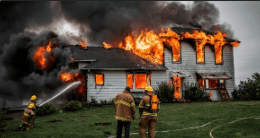
The Forest Service is partnered with the National Fire Protection Association and its Firewise Communities, a program that teaches people how to adapt to living with wildfire and encourages neighbors to work together and act now to prevent losses. According to the association, the number of homes lost in wildfires per year has increased by 163% and wildfires now cost the U.S. an estimated $63 billion to $285 billion per year in losses. The association also notes that nearly 45 million homes abut or intermingle with wildlands and more than 72,000 U.S. communities are now at risk.
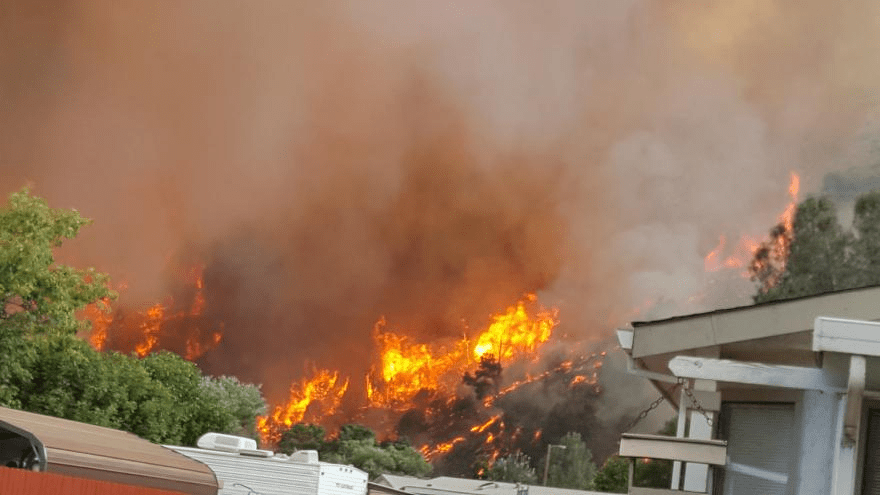
This means people living in communities near open spaces should take measures to heighten chances a wildfire will not consume their property. Firewise yards are protected through zones with grass, rock, or evergreen ground cover closure to the home, creating an area where high-intensity fires have little to burn.
This space is needed to slow or stop the spread of wildfire and it helps protect your home from catching fire—either from direct flame contact or radiant heat. Defensible space is also important for the protection of the firefighters defending your home. Make sure to have Homeowners’ insurance,
In and around your home
- Clear leaves and other debris from gutters, eaves, porches and decks. This prevents embers from igniting your home.
- Remove dead vegetation and other items from under your deck or porch, and within 10 feet of the house. Learn more about the basics of defensible space on the Firewise website.
- Screen or box-in areas below patios and decks with wire mesh to prevent debris and combustible materials from accumulating.
- Remove flammable materials (firewood stacks, propane tanks) within 30 feet of your home’s foundation and outbuildings, including garages and sheds. If it can catch fire, don’t let it touch your house, deck or porch.
- Wildfire can spread to treetops. Prune trees so the lowest branches are 6 to 10 feet from the ground.
- Keep your lawn hydrated and maintained. If it is brown, cut it down to reduce fire intensity. Dry grass and shrubs are fuel for wildfire.
- Don’t let debris and lawn cuttings linger. Dispose of these items quickly to reduce fuel for fire.
- Inspect shingles or roof tiles. Replace or repair those that are loose or missing to prevent ember penetration.
- Cover exterior attic vents with metal wire mesh no larger than 1/8 inch to prevent sparks from entering the home.
- Enclose under-eave and soffit vents or screens with metal mesh to prevent ember entry.
- Learn more about how to protect your home and property at www.firewise.org.
Create an emergency plan
- Assemble an emergency supply kit and place it in a safe spot. Remember to include important documents, medications and personal identification.
- Develop an emergency evacuation plan and practice it with everyone in your home.
- Plan two ways out of your neighborhood and designate a meeting place.
- Learn more about emergency preparedness planning on NFPA’s emergency planning webpage.
In your community:
- Contact your local planning/zoning office to find out if your home is in a high wildfire risk area, and if there are specific local or county ordinances you should be following.
- If you are part of a homeowner association, work with them to identify regulations that incorporate proven preparedness landscaping, home design and building material use.
- Talk to your local fire department about how to prepare, when to evacuate, and the response you and your neighbors can expect in the event of a wildfire.
- Learn about wildfire risk reduction efforts, including how land management agencies use prescribed fire to manage local landscapes.
- Learn how you can make a positive difference in your community.
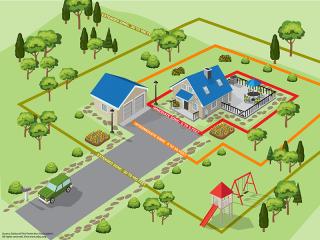
Research shows there are proven methods for preparing properties for withstanding the devastating impacts of a wildfire. Whether it’s replacing wood chips with gravel or remodeling your entire landscape design.

 DAVFLY