
When faced with United Nations’ and other International discussion topics; how would you resolve these issues? Most young politicians started from very early age by listen and discussing world’s challenges and how they can be resolve in a global perspective. Debating, travelling, listen and reading political topics and getting to actually know these individuals helped tremendously on how services, promotions and development were all interrelated when it comes to politics and how it influences the way businesses were conducted.
Judging some of these debates ranging from political topics, communication application tools, current events and opinions, social media and it’s effect on decision making, popular topics, speeches and duties performed by officials, I was exposed and listen to different reasons why certain decisions were made and why they argued to maintained such decisions.
Here are some of the most debated topics by these politicians and finalists in some of their conferences.
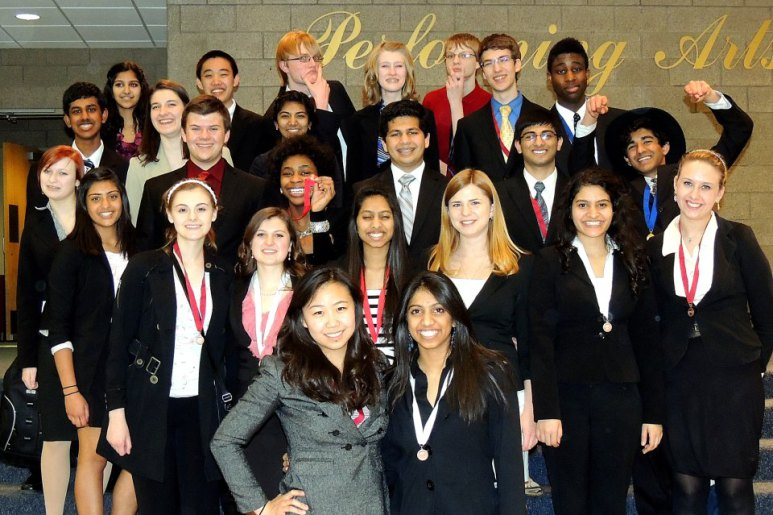
In a debate there are always two sides to be debated on, the CONS (Against, unfavorable or disadvantages)and the PROS (Agreed, For, favorable, advantages):
On this debate, we’ll first discuss the CONS then the PROS.
DISADVANTAGES
The electoral college is dominated by injustice and inequality on an individual, state and national level. Growing up, I quickly became aware of the advantages being an American Citizens, that our voting practices were implemented by the constitution of the United States which represented the people’s Right to Vote and stands in agreement with the Electoral College Voting System.
These are the CONS we’ll argue and discuss during this debate.
On an Individual Level:
- At an individual level, people’s votes are ignored by the winner-take-all method.
- The minority viewpoints are censored out in the electoral college and that is a violation of our 1st Amendment Right.
- In 2008 election, approximately 44% of the voters were neglected due to the winner-take-all system according to the results reported by the Federal Election Commission.
- In 2000 election, the figures were worst compared to 2008 where 46% of the votes were ignored based on the Electoral Voting Systems where the numbers were reported but the winner had majority of the electoral college votes.
On the State Level:
- At the state level, disproportionate voting power threatens the quality between states, as mentioned. As bigger states find themselves tripped off of most of their representation needed from all of their voters.
- As explained by Richard Dunham of BusinessWeek “small and mid-size states have a louder voice in selecting a President.”
For example, the smallest 22 states compare to California Sate in population ended up with twice as many electoral votes. - In the electoral college, a person in Wyoming is worth four times as much as someone in Texas.
- In a nation where “All men and women are created equally” as stated by the Declaration of Independence, the one person equal one vote system of the direct population vote, is the best way to go.
Lastly on the National Level:
- The presidency can be won without the majority votes of the people.
- According to the Declaration of Independence, the only legitimate government is one that runs under the consent of the governed.
- But under the electoral college voting system in the 2000 election, the minority was able to conquer the viewpoints of the majority as Al Gore lost to George Bush.
- Bush was able to unfairly beat the electoral college’s flawed mathematical games by taking advantage of disproportionate voting power and by the winner-take-all method as he campaigned deeply in selected few states.
The breakdown statistics according to FairVote.org and National PopularVote.org
The electoral college candidates have conducted bias campaigns spending 2/3 of their campaign visits and money in few states than expected.
In 2008, it grew worse as candidates spent 90% of their resources in just 15 states.
CONCLUSION
Better discussion emerges when diverse perspectives are intentionally included in a collaborative process, and everyone benefits when rural and regional differences are acknowledged. A direct popular vote would be an atmosphere of voting quality, not quantity and where all ideas would get an equal chance to be voiced heard, which may be apparent in the electoral college’s of winner-take-all method.
ADVANTAGES
Growing up as a youngster studying current event, I came to better understand the difference between electoral college voting system VS. popular voting system.
The electoral college voting is dominated by justice and equality for all on county, state and national levels.
These are the PROS we’ll argue and discuss during this debate.
On the COUNTY level:
- On a county level, people’s votes are counted by the elected chosen individuals ballots representing the electoral college votes for those particular counties.
- The minority viewpoint is censored in the electoral college and that is in agreement with the 1st Amendment Right.
- On a county level people’s votes are represented by the electoral college voting system by winner-take-all method.
- In 2008 election, approximately 56% of the voters represented votes accepted by the electoral college voting systems according to the results reported by the Federal Election Committee.
- In 2000 election, the figures were high compare to 2008 where 58% of the votes were accepted.
On the STATE level:
- On the State level, disproportionate voting powered the equality between states. Bigger, population wise states got represented by larger numbers of electoral college voters to equalize the proportion ratio to population.
- According to BusinessWeek report, small and mid-size states have a louder voice in selecting a president.
- For example, the smallest 22 states compare to California state in population ended up with twice as many electoral votes.
- In the electoral college, a person in Wyoming is worth four times as much as someone in Texas.
- In a nation where “All men and women are created equally when it comes to voting” as stated by the Declaration of Independence, the one person equal one vote system of direct popular voting system is not the best way to go.
Lastly on the National level:
- The presidency can be won without the majority of the people’s votes.
- According to the Declaration of Independence, the only legitimate government is one that runs under the consent of the governed.
- Under the electoral college voting system in the 2000 election, the minority was able to conquer the viewpoints of the majority as Al Gore lost to George Bush.
- Bush was able to unfairly beat the electoral college’s flawed mathematical games by taking advantage of the system and campaigned deeply in selected states.
- The breakdown statistics according to FairYote.org and National PopularVote.org states that –
- The electoral college candidates have conducted accurate and fair campaigns spending 1/3 of their resources visiting mostly all of the states.
- In 2008 it grew to closely 75% as campaign candidates spent their resources in nearly all 50 states.
CONCLUSION
I will conclude my speech by stating that:
- Better decisions emerges when diverse perspectives are intentionally included in a collaborative process, and everyone benefits when cultural and regional differences are represented and acknowledged.
- An electoral college method of voting which represents winner-take-all method has continuously prevail, representing the voice of minorities and diverse groups.
- The electoral college voting system will continue to enrich our country, the United States of America and its citizens to stabilize emerging differences.
By Judge Valerie Fotso
Citizens Right to Vote
The “Right to Vote” is a major topic among scholars when it comes to who gets to vote. Citizens may debate why special groups do or don’t vote in Democratic countries around the world. The ‘Right to Vote’ as define by Dictionary.com states that “A legal right guaranteed by the 15th amendment to the US Constitution; guaranteed to women by the 19th amendment; “American women got the vote in 1920″.
As documented in Wikipedia ( the free encyclopedia) – “The issue of voting rights in the United States has been contentious throughout the country’s history. Eligibility to vote in the U.S. is determined by both federal and state law. Currently, only citizens can vote in U.S. federal elections.[1] Who is (or who can become) a citizen is governed on a national basis by federal law. In the absence of a federal law or constitutional amendment, each state is given considerable discretion to establish qualifications for suffrage and candidacy within its own jurisdiction.
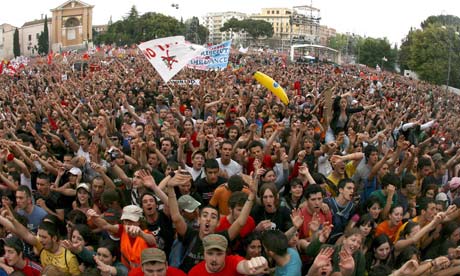
The US Gov’t have been running none stop, discussing and debating on controversial issues surrounding “The Right to Vote”. This has been a challenging topic on the hill for the past week and may continue if a resolution is not met. Some of the delegates and legislators are exuberant with thoughts on research work put forth by their opponents, giving them a golden opportunity to exhaust all of their contentions. Most spoke confidently on the topic and cited cases when the affirmative decision have tremendously made a huge impact in improving the standard of living for most Americans.
RELATED ARTICLES
- Irish Senate must now push for votes, seats for emigrants (irishcentral.com)
- Recent Irish emigrants are being let down by Ireland’s government (irishcentral.com)
- Voting Rights and Timelines (Infoplease.com)

 DAVFLY
Reblogged this on JDF Corporation and commented:
Great Debaters! What an excellent performance by this group of intellectuals.
LikeLike