
Did You Know?
During breeding season, Bald Eagles – the male and female work together to build a nest of sticks, usually located at the top of a tree.
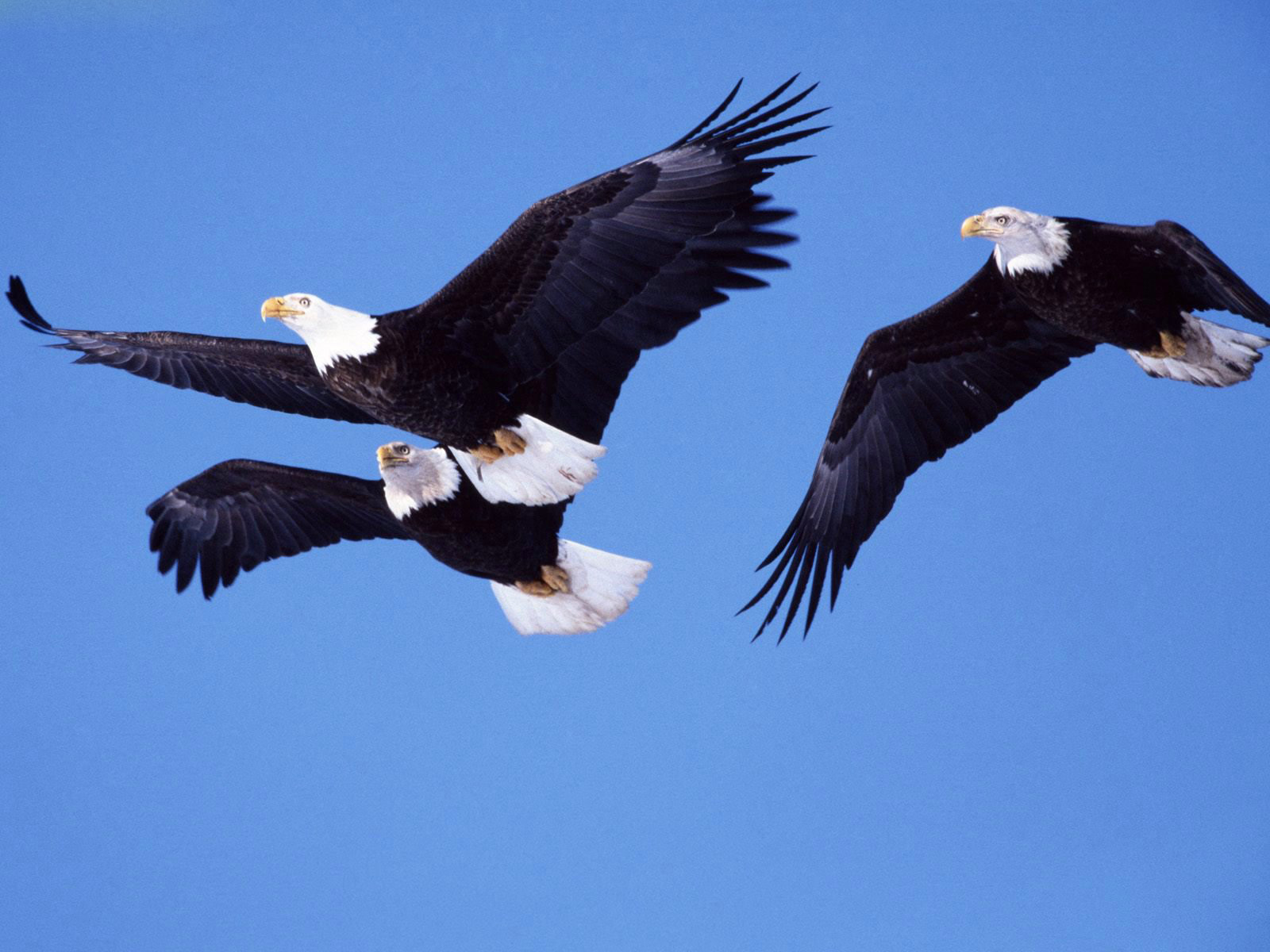
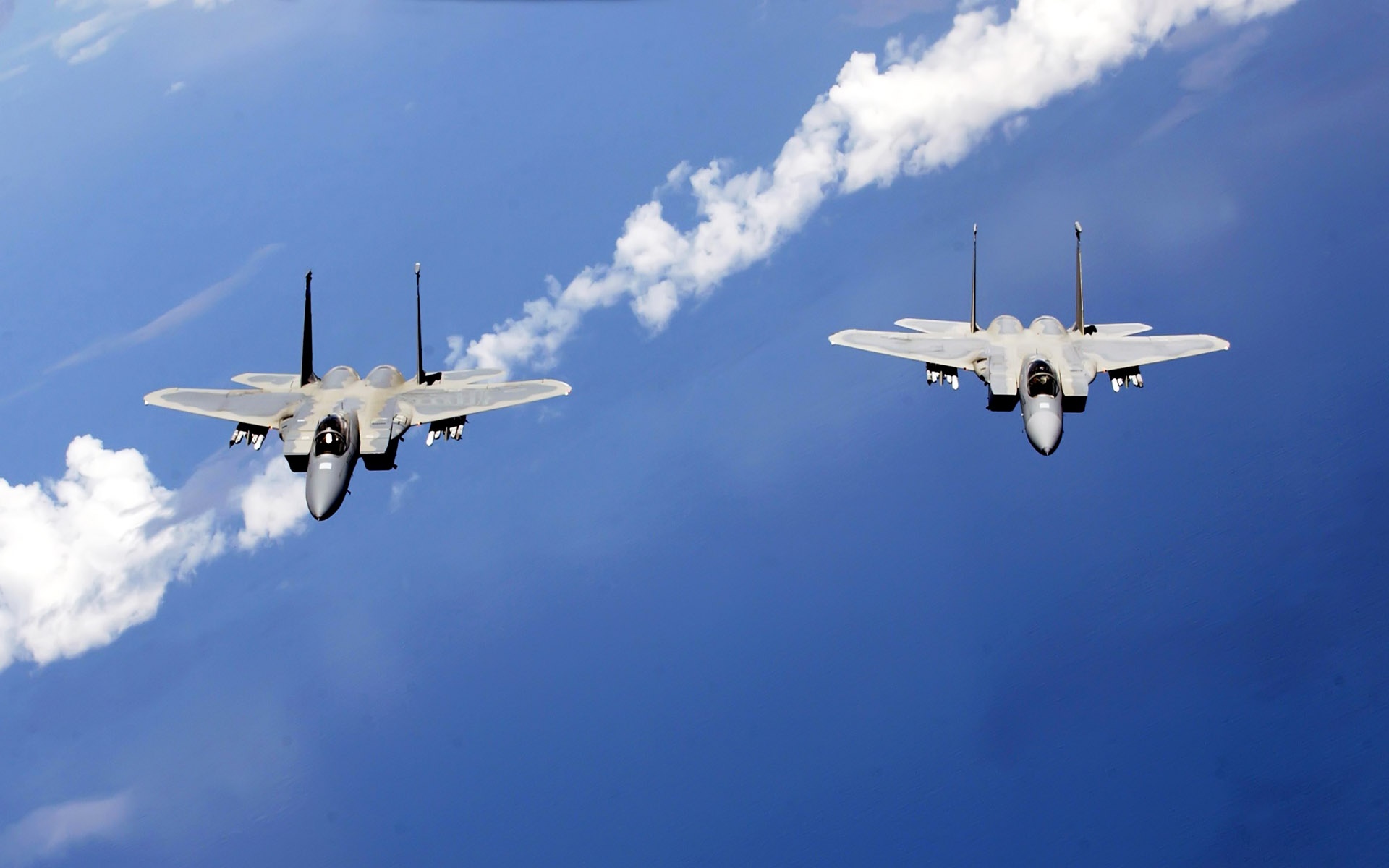
There are similarities in flight of birds flocking together creating a V-shape pattern which decreases the buoyancy thus allowing an increase in speed and decreasing the viscosity caused by the body of air around them. The same is true with Air jets of similar V-shape designs as shown below.
Drag is the aerodynamic force that opposes an aircraft’s motion (the thrust)through the air. Drag is generated by every part of the airplane (even the engines!).
As aerodynamically define, Drag force is proportional to the velocity for a laminar flow and squared velocity for a turbulent flow. Even though the ultimate cause of a drag is viscous friction, the turbulent drag is independent of viscosity Drag forces which always decreases fluid velocity relative to the solid object in the fluid’s path.
How is drag generated?
Drag is a mechanical force. It is generated by the interaction and contact of a solid body with a fluid (liquid or gas). It is not generated by a force field, in the sense of a gravitational field or an electromagnetic field, where one object can affect another object without being in physical contact. For drag to be generated, the solid body must be in contact with the fluid. If there is no fluid, there is no drag. Drag is generated by the difference in velocity between the solid object and the fluid. There must be motion between the object and the fluid. If there is no motion, there is no drag. It makes no difference whether the object moves through a static fluid or whether the fluid moves past a static solid object.
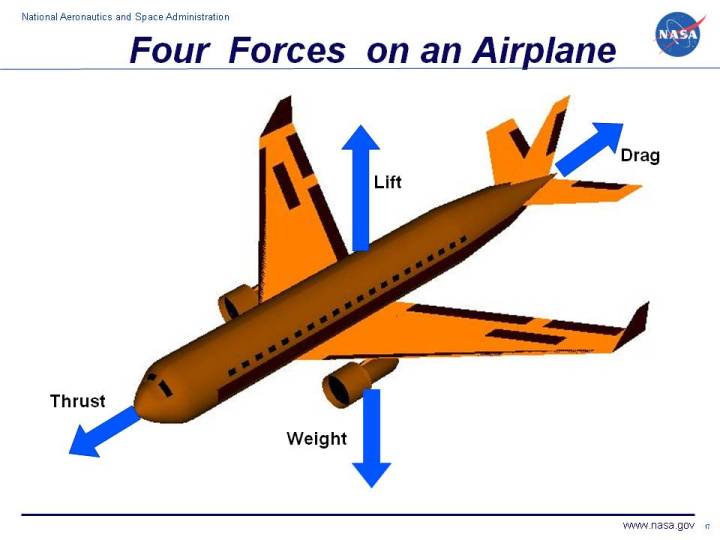
Drag is a force and is therefore a vector quantity having both a magnitude and a direction. Drag acts in a direction that is opposite to the motion of the aircraft. Lift acts perpendicular to the motion. There are many factors that affect the magnitude of the drag. Many of the factors also affect lift but there are some factors that are unique to aircraft drag.
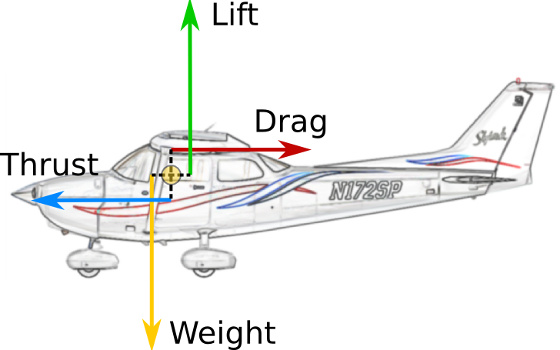
An airplane with a different structure indicating the 4 forces
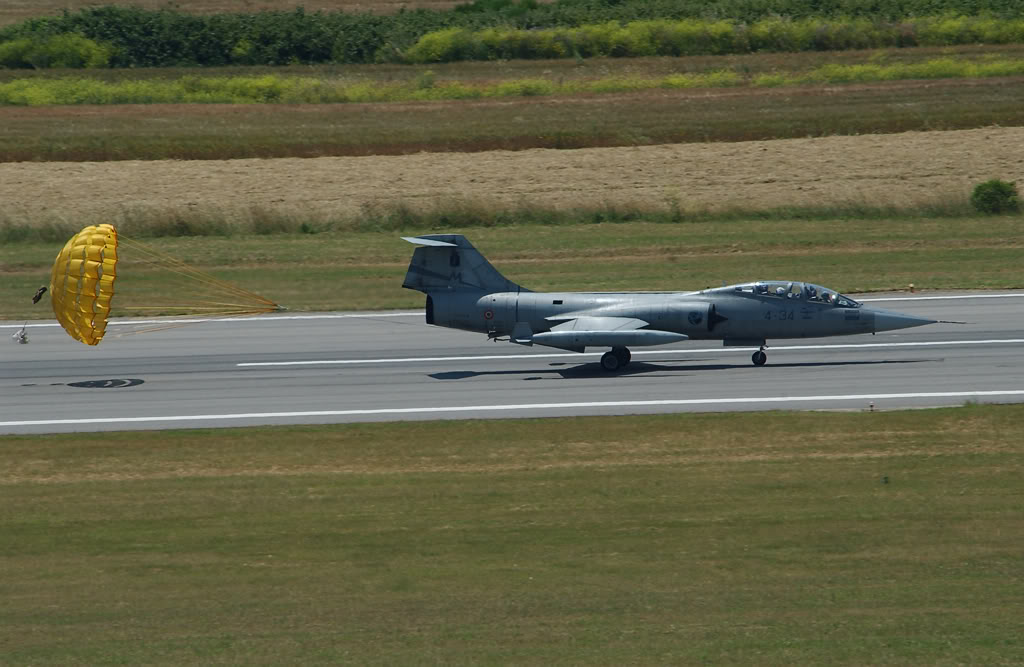
Landing airplane
We can think of drag as aerodynamic friction, and one of the sources of drag is the skin friction between the molecules of the air and the solid surface of the aircraft. Because the skin friction is an interaction between a solid and a gas, the magnitude of the skin friction depends on properties of both solid and gas. For the solid, a smooth, waxed surface produces less skin friction than a roughened surface. For the gas, the magnitude depends on the viscosity of the air and the relative magnitude of the viscous forces to the motion of the flow, expressed as the Reynolds number. Along the solid surface, a boundary layer of low energy flow is generated and the magnitude of the skin friction depends on conditions in the boundary layer.

 DAVFLY